Animal Models of Food Insecurity and Obesity
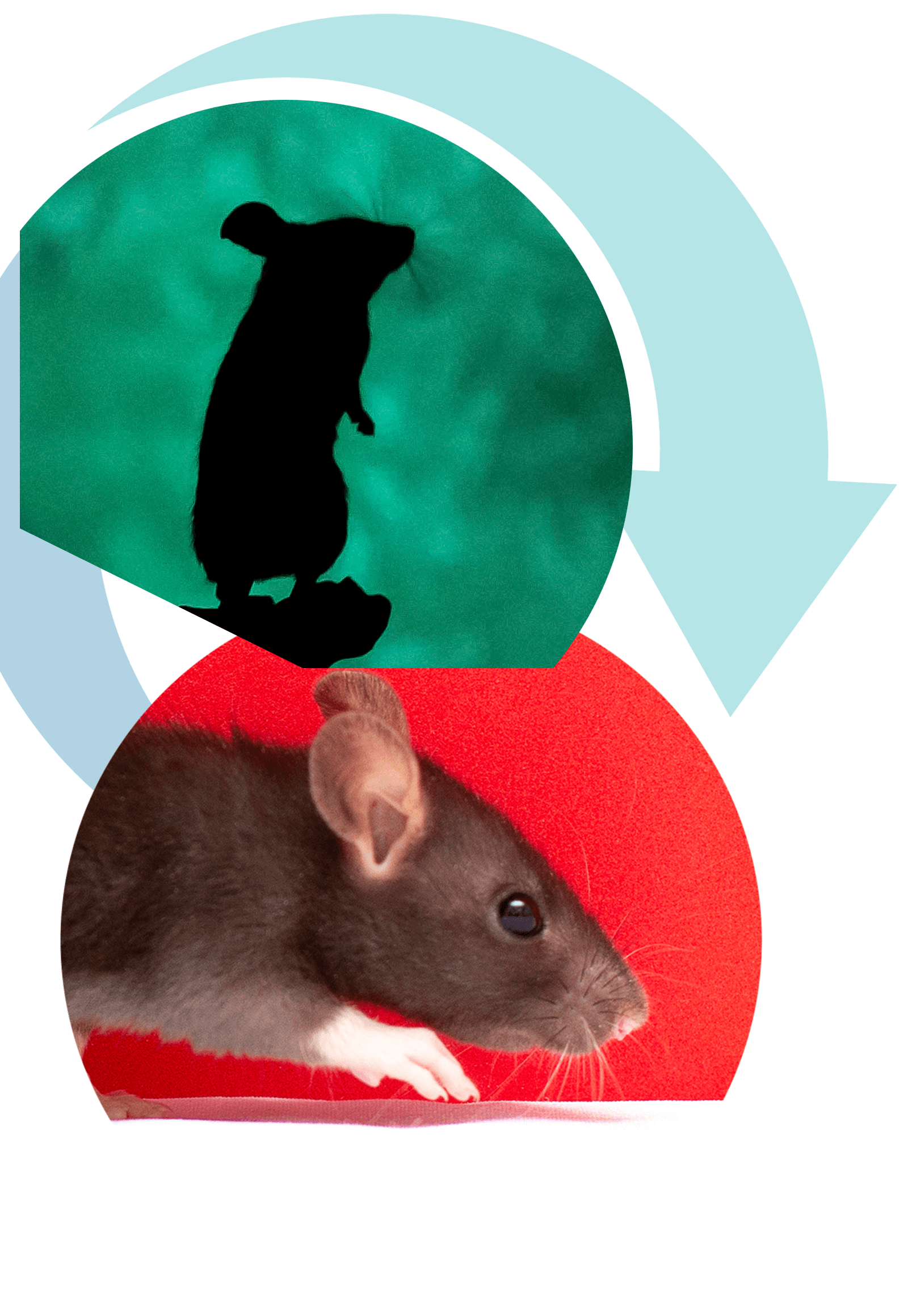
The NOURISH study is not just a study of the Food Insecurity (FI)-Obesity Paradox in both humans, but animals, as well. Chris Newgard, PhD, will lead his team at the Duke Molecular Physiology Institute (DMPI) to develop an animal-based in laboratory rats to understand how animals respond to episodic food deprivation and fluctuations in diet. It is believed amongst researchers that both humans and animals are similar in that the FI Paradox leads to an increased risk of obesity and cardiometabolic diseases, however there is no data currently to concretely support this.
Through expertise and resources in molecular physiology, Dr. Newgard and his team will determine which fundamental molecular mechanisms cause physiological responses in lab rats as a result of episodic food deprivation. The lab rats will be fed various diets at different intervals, and researchers will collect metabolic data and observe the energy level of the lab rats. These diets include a standard, low-fat chow diet standard for lab rats, and a high-fat chow diet. Through the 10-week life cycle of this part of the NOURISH study, researchers will collect data on the physical and metabolic change in each rat’s body.
Similarly with humans, when fed a high-fat and/or calorically dense diet, it is hypothesized that the lab rats will experience an initial increase in energy levels, but then gradually level off and decrease when consistently fed the high-fat chow. Additionally, the rats who are being fed the high-fat chow may start to eat their food in a more aggressive and dependent way. Through collecting metabolic samples such as insulin levels, glucose levels, and data on other hormonal changes, Dr. Newgard and his team will be able to determine how an animal’s body responds to these interventions. Once this data is established for animals, researchers will be able to have more insights into the relevance of the relationship between animal and human FI Paradox experiences.